Stitch Embroidery Review
First Impressions: A Quirky, Sewing-Inspired Font
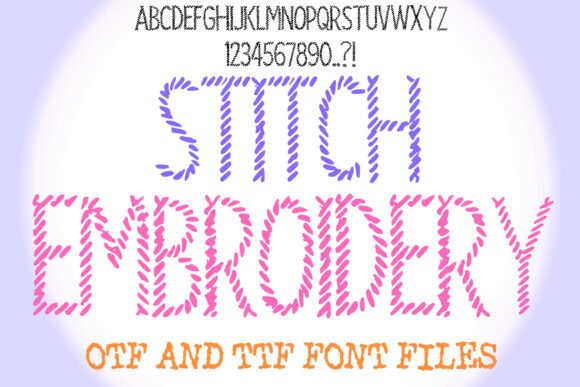
The first thing that catches my eye about Stitch Embroidery is its unique character—a sewing style font that feels both playful and professional. The quirky nature of the design suggests it’s not just for decorative use, but something that can carry a brand’s personality through various applications. Whether you're looking to create custom apparel or branded merchandise, this font offers a distinctive visual identity.
Design Strengths for Small Business Merchandise
Stitch Embroidery is versatile enough to work across multiple product types, making it an excellent choice for small business owners. Its sewing style gives it a handcrafted feel, which aligns well with handmade products, Etsy shops, and boutique brands. From embroidered patches to cap embroidery, the design can be adapted to suit different sizes and placements.
One of the standout features of Stitch Embroidery is its ability to be customized in terms of color and text. This flexibility makes it ideal for creating custom apparel and brand identity elements. For instance, a local café could use it on aprons, while a florist might incorporate it into tote bag designs or packaging accents.
The lettering is clean yet textured, allowing for a balance between elegance and approachability. It works especially well on items like work shirts, uniforms, and product labels, where clarity and readability are essential.
Real-World Applications for Branding and Merchandise
Stitch Embroidery has a wide range of applications in commercial embroidery projects. Consider using it as a chest logo accent, a sleeve detail, or even a branding asset for event merch. Its sewing style adds a tactile element that stands out on fabric, enhancing the handmade product aesthetic.
For small business merch, this font can serve as a signature element. Imagine a pet brand using it on caps or a bakery incorporating it into tote bag design. The textured quality of the design adds depth, making it more engaging for customers.
Additionally, Stitch Embroidery can be used as a digital embroidery file for printable mockups, helping businesses visualize how the design will look on finished products. This is especially useful when working with clients who need to approve the final look before production.
Considerations for Commercial Use
While Stitch Embroidery is visually appealing, there are some practical considerations to keep in mind when using it for commercial purposes. First, it's important to test the design in black and white to ensure it reads clearly at smaller sizes. This is particularly crucial for embroidered patches and cap fronts, where space is limited.
Another key factor is thread color contrast. Since Stitch Embroidery has intricate details, the choice of thread color can significantly impact the overall appearance. Testing on real fabric is recommended to avoid unexpected results. Additionally, using the right stabilizer and checking the hoop size will help maintain the integrity of the design during the embroidery process.
It's also worth noting that Stitch Embroidery may not perform as well on dark uniforms or curved surfaces due to its detailed outlines and high stitch density. These factors should be considered when planning the placement and scale of the design.
Impact on Brand Identity and Customer Engagement
Using Stitch Embroidery can greatly enhance a brand’s visual consistency and professionalism. The quirky yet polished nature of the design helps create a memorable brand identity that resonates with customers. It also supports buyer engagement by adding a personal touch to products.
Moreover, the handmade product feel of Stitch Embroidery aligns well with craft businesses and Etsy sellers. It can be used as a design asset to differentiate a brand in a competitive market. Whether it's on product packaging accents or customer gifts, the design adds value and enhances the customer experience.
Practical Tips for Embroidery Designers
As an experienced embroidery designer, I recommend several steps before using Stitch Embroidery in a commercial setting:
- Test it in black and white to ensure legibility at small sizes.
- Check if it works at small patch size and curved surfaces.
- Review thread color contrast and inspect spacing.
- Confirm hoop size and use proper stabilizer.
- Test on real fabric to see how it looks in practice.
- Create a mockup for client approval before production.
- Compare it beside other design assets to maintain visual consistency.
- Confirm commercial licensing before using it for business purposes.
By following these guidelines, designers can ensure that Stitch Embroidery performs optimally across all commercial embroidery projects, from apron embroidery to custom apparel.